
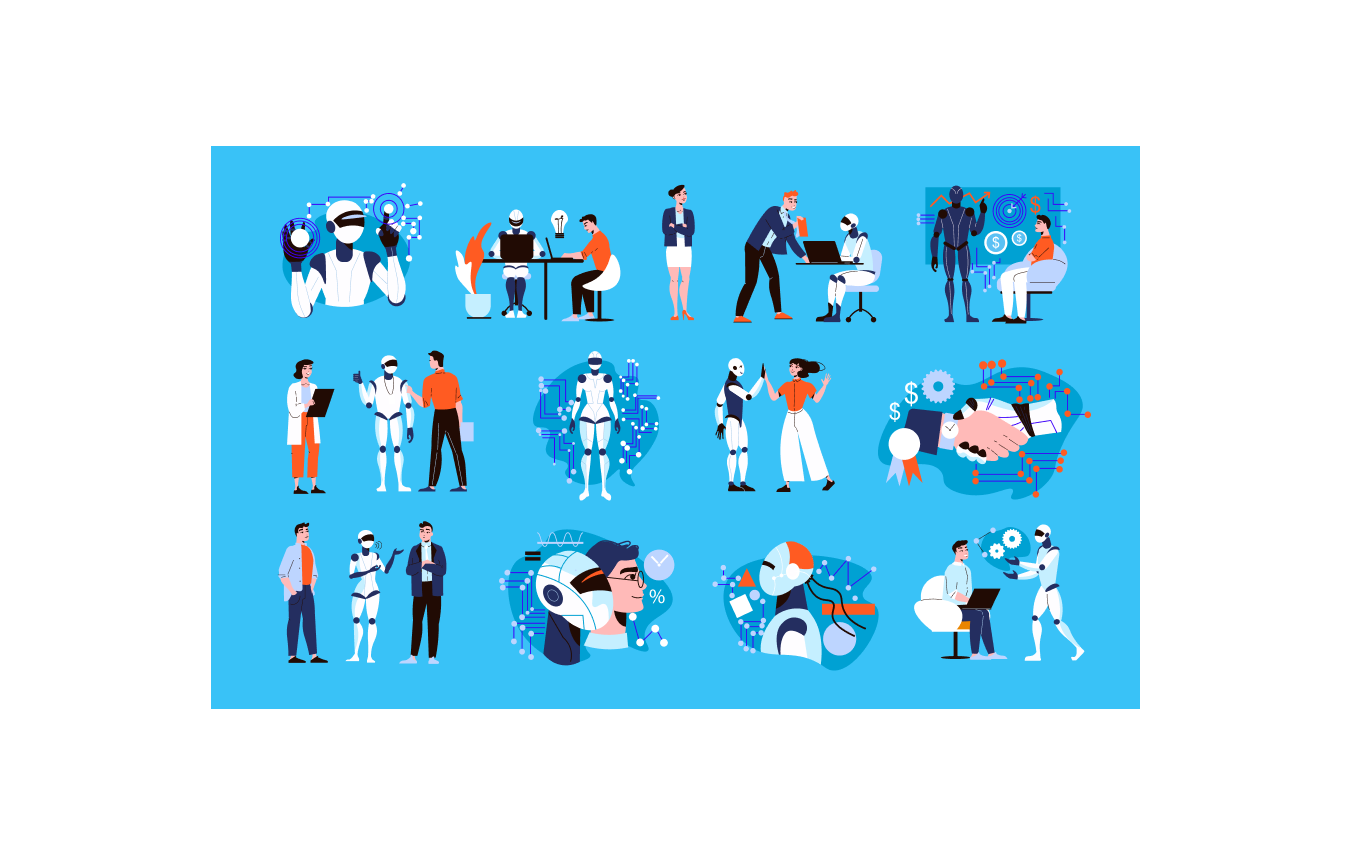
Relying on traditional rule-based systems is like clinging to a rotary phone in the age of iPhones.
The tech landscape is undergoing a major transformation, keeping AI Agents at the forefront. The AI Agents are autonomous software entities that perceive, decide, and act independently in real time. They’re the brains behind:
- Self-driving cars navigating complex streets,
- Warehouse robots optimizing fulfillment,
- Financial bots executing split-second trades.
But here’s the catch: not all agents are built equal. And choosing the wrong one can leave your system rigid, reactive, or outright obsolete.
That’s why understanding AI Agent Types can be a strategic advantage for your business. In this guide, we’ll explore essential types of AI agents and their real-world applications so you can make smarter, future-ready decisions.
What Are AI Agent Types?
Think of an AI agent as your assistant. It senses its environment, analyzes data, and performs actions to meet a goal
Now, AI agent “types” refer to the different design architectural models that shape how agents behave, adapt, and make decisions.
Some sophisticated agents even learn from experience, collaborate with other agents, and make optimized decisions in dynamic environments.
Let’s break down each type of AI agent to understand how they work and how you can choose the right one for building future-ready systems.
The 10 AI Agent Types You’ll See in 2025
1. Simple Reflex Agents
Simple reflex agents on instant “if‑this‑then‑that” rules without memory or foresight. They operate solely on the current input without asking any further questions. They react instantly without any memory or sense of context.
You can take a motion-sensor light as an example of a simple reflex agent that responds to movement. It is the most basic type of AI agent that doesn’t remember previous actions or anticipate future ones.
Tool Examples: Roomba Vacuum, IFTTT automates tasks for business and homes.
These agents are ideal for predictable, rule-based environments. Such a system fails in dynamic or evolving situations where adaptability is key.
2. Model-Based Reflex Agents
Model-based reflex agents use an internal model of the environment to interpret inputs and decide on actions. It takes a step further to adjust and respond based on the environment.
For instance, a smart thermostat remembers your preferred temperature settings at different times of the day and adjusts accordingly.
Tool Example: Tesla Autopilot predicts traffic flow and adjusts driving decisions.
This type of agent is perfect for smart devices and context-aware applications like HVAC systems, where understanding past states improves performance.
3. Goal-Based Agents
Goal-based agents act based on achieving specific goals. Unlike reflex agents, goal-based agents don’t just react; they plan strategically to achieve particular objectives. Such agents excel in tasks such as path planning, autonomous navigation, and logistics, where decisions must align with predefined goals.
Tool Example: Amazon Scout delivery robots plan for last-mile deliveries
Goal-based agents are best for logistics, robotics, and autonomous navigation.
4. Utility-Based Agents
Utility-based agents maximize the “utility” function to get the best possible outcome. It is designed to evaluate multiple options. They weigh options to choose the most beneficial alternative and balance trade-offs effectively.
For instance, a utility-based agent can be a financial AI that can select a stock portfolio based on risk-return balance.
Tool Example: Google Ads Smart Bidding
These agents are widely used in finance, e-commerce recommendations, and resource optimization systems.
5. Learning Agents
Learning agents are driven by machine learning. They adapt and improve their behavior over time through experience. You can take the recommendation system of Netflix or YouTube as the prime example of a learning agent. These systems understand your viewing habits and refine suggestions accordingly.
Tool Example: ChatGPT is powered by the learning agent principles to refine its responses.
These agents are critical in personalization, adaptive systems, predictive analytics, and fraud detection.
6. Multi-Agent Systems (MAS)
Multi-agent systems collaborate with multiple AI agents or sometimes compete to solve complex problems. Such a model can help to map out a disaster zone efficiently through coordination among autonomous drones.
Tool Example: Starcraft II AI (DeepMind AlphaStar)
Multi-agent systems are revolutionizing smart cities, robotic swarms, supply chain optimization, and robotic swarms.
7. Reactive Agents
Reactive agents are similar to reflex agents but are often deployed within decentralized systems for greater resilience.
They are fast, simple and works best for environments that require split-second decisions. They work well in unpredictable environments like gaming AI or robotics, where fast, context-sensitive reactions are required.
Tool Example: Unity AI for Game Development
Such agents are frequently used in simulation systems, gaming, and obstacle avoidance in robotics.
8. Deliberative Agents
Deliberative agents think before they act. They simulate different scenarios, predict outcomes, and choose the smartest path forward. Your self-driving car serves as your deliberative agent, calculating the safest route to reach your destination.
Tool Example: Waymo Autonomous Vehicles
These are great for strategic environments, logistics, and route optimization that demand thoughtful, calculated actions.
9. Hybrid Agents
Hybrid agents combine reactive and deliberative architecture to deliver both fast responses and strategic planning. An autonomous vehicle hits the brakes upon encountering any form of obstacle, while also planning the best route. In this case, an autonomous vehicle uses both a reactive and deliberative model.
Tool Example: Zendesk AI
Such hybrid agents are ideal in domains like healthcare diagnostics, supply chain optimization, and smart assistants.
10. Mobile Agents
Mobile agents are software programs that move across networks or devices to perform tasks remotely.
Instead of sending all data to a central server, they process it locally and send back only results to save time and bandwidth.
These agents are particularly useful in distributed environments like cloud computing and IoT ecosystems, enabling seamless coordination in large, interconnected systems.
Tool Example: AWS IoT Greengrass (used for predictive maintenance of factory equipment, etc.)
Mobile agents work as a cloud-based AI assistant that can travel across IoT devices to execute commands efficiently.
Real-World Applications of AI Agents
AI agent architectures are reshaping industries and how we interact with technology every day. You can see the application of such architecture in autonomous vehicles, healthcare systems, homes, finance, and more.
Here’s how they’re making an impact across key domains:
1. AI in the Automotive Industry
Self-driving cars are perhaps the most prevalent example of how different types of AI systems come together seamlessly. They use hybrid agents that combine quick reflexes with thoughtful planning:
- Reflex actions: Reacting within milliseconds to sudden obstacles like a pedestrian crossing the road.
- Goal-based reasoning: Planning the most efficient route to a destination while avoiding traffic.
- Multi-agent coordination: Communicating with traffic lights and other vehicles to manage intersections and enable smoother traffic flow.
Real-World Example: Tesla’s Full Self-Driving (FSD) system leverages layered agent architectures for perception (detecting objects), planning (path optimization), and control (real-time braking and acceleration).
2. Autonomous Vehicle Collaboration (Multi-Agent Systems)
Autonomous vehicles don’t operate in isolation; they’re part of a broader network. Using multi-agent systems, cars must:
- Negotiate road space with other vehicles.
- Predict pedestrian intentions at crosswalks.
- Form platoons (groups of vehicles driving closely together) to reduce drag and save fuel.
3. Smart Homes & Personal Assistants
Devices like Amazon Alexa, Google Assistant, and Apple Siri use a mix of learning agents and utility-based agents to deliver seamless experiences:
- Learning: Understanding your preferences over time, like knowing you prefer jazz in the evenings.
- Utility-based reasoning: Balancing multiple factors (e.g., when to lower lights for energy saving while keeping the room bright enough for reading).
Real-World Example: Google Nest Thermostat uses model-based agents to predict and adjust temperature settings based on your schedule and weather forecasts.
4. Finance & Risk Management
Financial systems are driven by intelligent agents that can:
Real-World Example: Bloomberg Terminal’s AI tools and Robo-Advisors like Betterment use AI agents to dynamically rebalance portfolios and optimize tax strategies for investors.
- Analyze massive datasets in real time.
- Detect fraudulent transactions within milliseconds.
- Adjust portfolio allocations to minimize risk and maximize returns using utility-based decision-making.
5. Healthcare and Hospital Automation
Healthcare AI agents are improving patient outcomes and streamlining operations:
- Patient Monitoring: Agents track vitals in real time and alert doctors if intervention is needed.
- Treatment Planning: Utility-based agents recommend personalized treatment plans based on patient history and current health data.
- Hospital Automation: Mobile agents schedule surgeries, manage bed allocations, and coordinate staff shifts.
Real-World Example: Aidoc works as a hybrid AI agent that analyzes medical images for urgent conditions.
Why AI Agents Matter to Businesses
AI agents have become the backbone of modern business operations. Whether you’re building a logistics platform, automotive solution, or digital assistant, you need the right AI agent types to scale, adapt, and lead.
Moreover, leveraging such agents helps companies to stay competitive, innovate faster, and deliver better customer experiences.
They’re strategic assets for:
- Unlock Automation at Scale
You can let the AI agent handle the repetitive and time-sensitive tasks like order fulfillment, customer inquiries. This allows businesses to focus on strategic initiatives.
- Build Smarter Product
Embedding AI agents into your solutions enables real-time learning and decision-making. From IoT-enabled appliances to fintech platforms, businesses can offer dynamic, responsive products that grow smarter with every interaction.
- Personalized customer experiences
Utility-based and learning agents tailor recommendations and focus on providing hyper-personalized experiences to the customer. They understand the individual user preferences to provide the service, helping brands create customer relationships.
- Real-time decision-making
AI agents can fast-track complex data processing and act instantly to optimize operations or prevent issues before they occur. Such AI agents are popular among businesses involved in logistics, healthcare, and e-commerce.
Businesses that invest in intelligent agent systems now will have a clear edge in scalability, innovation, and customer engagement. Those who don’t risk falling behind in an increasingly AI-driven world.
Build Custom AI Agents
AI Agent Types are not just a technical classification. They are the foundation of intelligent systems in every industry you can think of – from autonomous cars to personalized medicine.
Whether you’re designing a self-driving vehicle, a virtual assistant, or a logistics platform, success depends on:
- Choosing the right AI agent types for your needs.
- Understanding how agent architectures enable autonomous, adaptive, and collaborative systems.
- Building solutions that scale intelligently in dynamic real-world environments.
Whether you’re designing a smart assistant, automating workflows, or enabling real-time decision-making, we’ll help you develop AI agents that are adaptive, scalable, and future-ready.


[…] or ongoing support, having clear goals will guide the hiring process. It also helps to identify the staff augmentation model that aligns with your […]
[…] in the IT industry, staff augmentation helps businesses adapt quickly to meet project needs based on roles like software development, […]
[…] project management is crucial in staff augmentation for agile environments. Tools like Jira, Trello, or Asana enhance collaboration and streamline workflows for efficient […]
[…] Dynamics: Consider how the candidate will integrate with existing team members and contribute to team […]
[…] and direct messaging, and integrates with various other tools. Such collaboration are essential to manage augmented staff. Slack’s intuitive interface and extensive integrations make it a central hub for remote […]
Comments are closed.